
Many learners memorize Quran as a line that moves forward. Start at the beginning, keep going, and hope the next phrase appears.
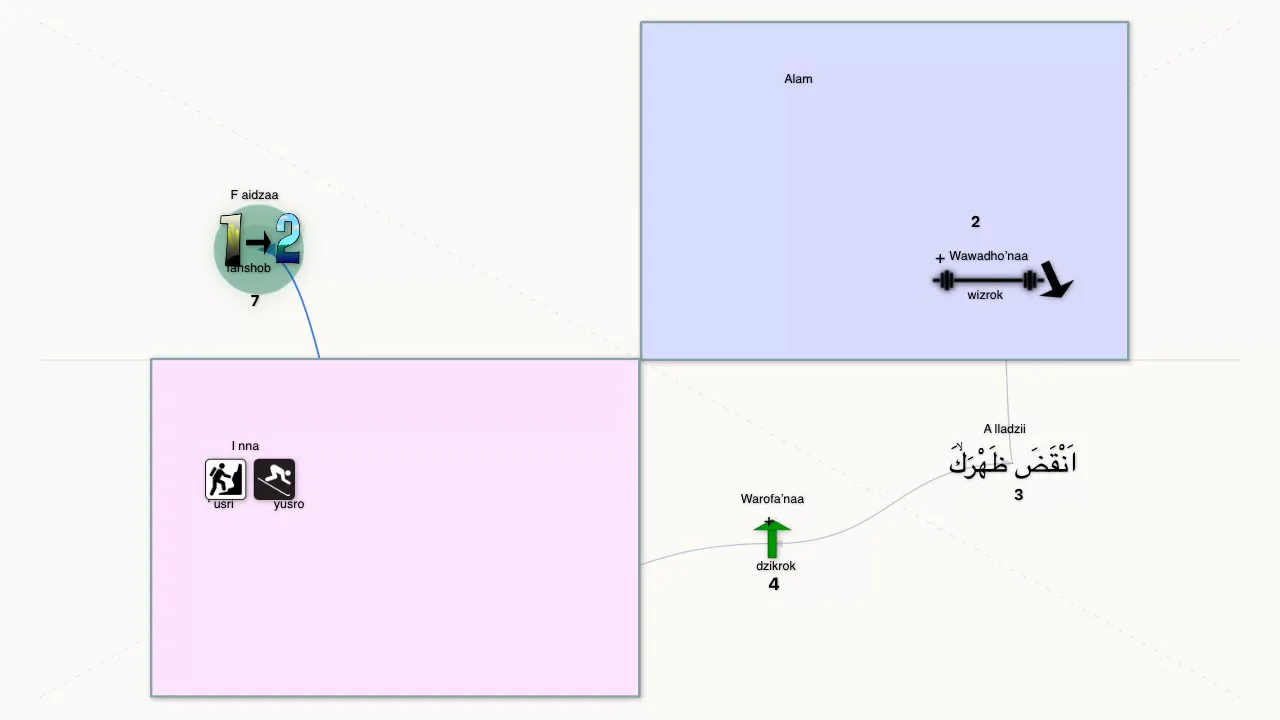
Visual Quran memorization adds another structure: place. In the Al-Husen Method, each ayah becomes a stone on a visual surah map.
What is a surah map?
A surah map is a visual path through the surah. Each ayah has a position. Each position can carry a keyword icon or pictographic cue connected to the ayah's meaning.
The map is not a replacement for the Mushaf. It is a memory aid that sits beside the Mushaf.
Why place matters
People often remember places differently from lists. A room, a street, or a familiar route can hold many details because each detail has a position.
- the sound of the ayah
- the meaning of the ayah
- the visual cue on the stone
- the ayah's position in the surah map
- the relationship to the stones before and after it
How this differs from decoration
Visual memorization is not about making the Quran look playful. The Quran text remains central and treated with reverence.
The visual layer has a practical job: it helps the learner attach a meaning and location to each ayah.
Try it with a short surah
Start with one short surah. Open the Surah memorization guides, choose a surah, and notice its verse count and review checkpoints.